1
/
of
4
KEL OTERO ART
Curiosity
Curiosity
Regular price
$5,550.00 USD
Regular price
$5,450.00 USD
Sale price
$5,550.00 USD
Unit price
/
per
Couldn't load pickup availability
Share
Curiosity is the emotion that keeps the door open when everything else says to close it.
When Elvis Presley recorded Suspicious Minds in January 1969 at American Sound Studio in Memphis, it became his first number one single in seven years. A stunning return for a man the industry had quietly begun to write off. But listen past the triumph of the comeback and what the song actually describes is a mind turned inward on itself, circling the same fear relentlessly, unable to trust what it cannot control. “We’re caught in a trap, I can’t walk out, because I love you too much baby.” A suspicious mind is the opposite of a curious one. It has already decided what is true and spends all of its energy defending that conclusion against any evidence to the contrary. It mistakes vigilance for wisdom and calls the closing of itself protection.
That trap is the emotional mirror this painting holds up.
Curiosity is the antidote to exactly that kind of self-imprisonment. It is the inner orientation that approaches the unknown. Another person, an emotion, a memory, a fear, not with the need to confirm what it already believes but with genuine openness to being surprised. Where suspicion contracts, curiosity expands. Where suspicion guards, curiosity reaches. Where suspicion circles the same ground endlessly, curiosity finds the door that was always there and walks through it. In the context of shadow work, curiosity is not a luxury. It is the essential tool. The only orientation that makes it possible to examine the darkest corners of the self without being destroyed by what lives there.
Elvis understood the trap of the suspicious mind intimately, though perhaps not in the way the song intended. By the time of his death in August 1977 at just 42, he had spent the final years of his life in a kind of self-imposed fortress. Graceland as both sanctuary and prison, surrounded by the Memphis Mafia, increasingly isolated from the ordinary human contact that curiosity requires to stay alive. The man who had exploded every boundary of American music and culture in the 1950s, who had moved with radical, instinctive openness toward Black musical traditions at a time when that crossing was genuinely transgressive, had become in his final chapter a man caught in his own trap. The curiosity that had made him revolutionary had been slowly suffocated by fame, by prescription medication, by the impossible weight of being Elvis Presley in a world that would not allow him to be anything less.
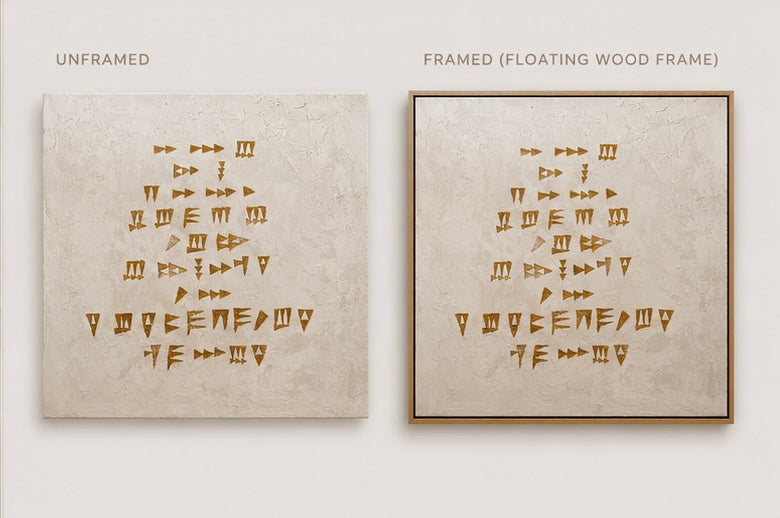
The symbols pressed into the rock-like formations of this work transcribe fragments of his lyrics as permanent testament. Words from a man whose greatest gift was his willingness, early and instinctively, to be curious about everything the world told him to stay away from. That original curiosity changed the entire landscape of American music. Its erosion, over the years that followed, quietly dismantled the man himself.
In the Survival Mode series, curiosity is the thread that makes the entire journey navigable. Without it, the heavier emotions, despair, flooding, heartbreak, become walls rather than doorways. With it, they become questions worth sitting inside: what is this trying to show me? What does this feeling know that I have not yet allowed myself to know? Neuro-aesthetics confirms that aesthetic curiosity. The kind activated by art, by music, by the willingness to stand before something and ask what it means opens the brain to new pattern recognition, expands our tolerance for ambiguity, and deepens our capacity for genuine connection.
The rock-like formations and their symbols in this work are themselves an invitation. Ancient-feeling marks that demand to be deciphered, to be approached slowly, to be turned over with patience until their meaning surfaces. The viewer who lingers longest is always the one who arrived with questions rather than conclusions.
“We’re caught in a trap.” The trap is real. But curiosity is always the way out. The quiet, persistent willingness to look directly at what frightens us and ask, with genuine openness, what it is trying to teach.
This piece asks: what would you discover about yourself if you chose curiosity over certainty; and stayed with the question long enough to hear the answer?