1
/
of
4
KEL OTERO ART
Amusement
Amusement
Regular price
$5,550.00 USD
Regular price
$5,550.00 USD
Sale price
$5,550.00 USD
Unit price
/
per
Couldn't load pickup availability
Share
Amusement is the emotion that finds the light inside the ordinary. The quiet, knowing delight of a soul at ease enough with itself to simply enjoy being alive.
When Otis Redding recorded (Sittin’ On) The Dock of the Bay in December 1967, just three days before his death, he was doing something he had never quite done before, he was still. The man who had built his entire reputation on the most physically explosive, emotionally urgent live performances in soul music, the man who left audiences wrung out and converted at every stop, had written a song about sitting down, watching the tide roll in, and doing nothing in particular. “Sittin’ in the morning sun, I’ll be sittin’ when the evening comes.” There is an amusement embedded in that stillness. The gentle, private pleasure of a man who had spent his entire career in motion finally giving himself permission to simply be present to the moment without demanding anything of it.
That permission is the emotional heartbeat of this painting.
Amusement is frequently misunderstood as the shallowest of emotions. Associated with laughter, distraction, entertainment, the surface of things. But at its deepest, amusement is a profound act of presence. It is the emotional state that arises when we are relaxed enough, safe enough, sufficiently unburdened by the weight of survival to notice the small, delightful textures of being alive. The way light moves on water. The absurdity of sitting two thousand miles from home watching the same tide go in and out. The fact that after everything, the struggle, the striving, the desperate human need to matter. There is also just this: a dock, a bay, a man with nowhere urgent to be.
Neuroaesthetics tells us that amusement and play are not frivolous states. They are neurologically essential. The conditions under which the brain integrates experience, consolidates learning, and restores the capacity for creativity and connection. In the architecture of the Survival Mode series, amusement is the breath between the heavier emotions. It is the reminder that healing is not only forged in darkness. Sometimes it arrives in the form of an afternoon with nothing required of you.
Otis Redding never heard his most famous song on the radio. He was killed on December 10, 1967, when his private plane crashed into Lake Monona in Madison, Wisconsin, just days after the recording session. He was 26 years old. Dock of the Bay was released posthumously in January 1968 and became his first and only number one single. A song about stillness and ease and the simple pleasure of watching the world turn, heard by millions only after the man who sang it was gone. There is an almost unbearable irony in that. The most relaxed, unhurried thing Redding ever recorded becoming the song the world received without him in it, a message of quiet amusement and gentle presence delivered from the other side of absence.
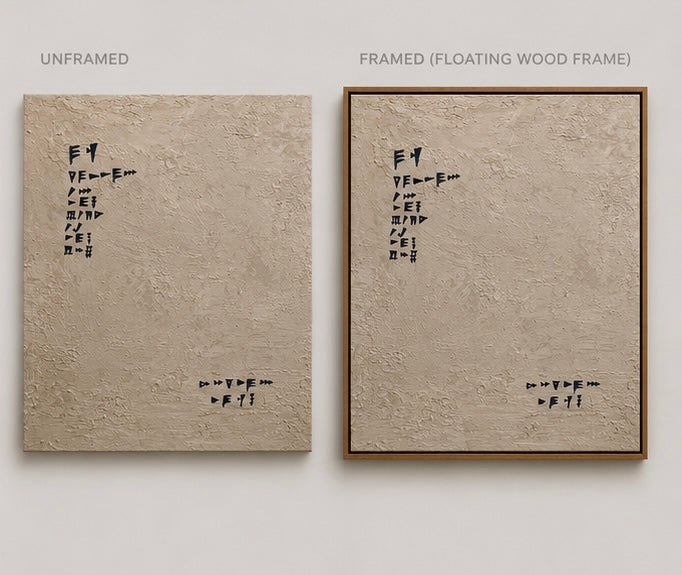
The symbols carved into the rock-like formations of this work transcribe fragments of his lyrics as testament made permanent. Words from a man who spent his brief life giving everything he had at full volume and found, in his final recording, that what he most wanted to express was the simple, luminous pleasure of doing nothing at all. That the dock, the bay, the tide, the sun. That these ordinary things were enough. That he was enough, exactly where he was.
In a series built on the transmutation of pain into beauty, amusement stands as its own quiet revolution. It does not announce itself. It does not demand to be taken seriously. It simply sits in the warmth, watches the water, and allows the moment to be exactly what it is, which turns out to be everything.
“I’m just gonna sit at the dock of the bay, wastin’ time.” Not wasting time at all. Redeeming it.
This piece asks: When did you last allow yourself to simply be amused by the gift of being here. Not in spite of everything, but because of it?